Showing posts with label values. Show all posts

Thursday, 9 August 2012

Foetal Alcohol Syndrome Disorder

Sarah Airey of the Foetal Alcohol Syndrome Disorders Trust has sent in some information asking churches to consider getting involved in FADS Day in some way. There are plenty of suggestions here for things you might do. There is a variety of medical opinion about the effect of a very small amount of alcohol in and just before pregnancy, but the tragedy, today, is that many women drink quite a bit even just socially without even realising this can affect their unborn child. We have friends who have adopted a child with the Disorder and the effect on her life because of the difficulties caused is far reaching and will be with her for the whole of her life.

HOST A BIG BREAKFASD
National FASD Day - 9th September 2012


Helpline 01608 811599

The FASD Trust  (Foetal Alcohol Spectrum Disorders) is organising a BIG BREAKFASD on 9th September. The Trust is urging people to abstain from alcohol for 9 days and organise a BIG BREAKFASD to fundraise and heighten general awareness of the condition. FADS Day is on the ninth day of the ninth month every year. The date signifies the nine months of pregnancy. 
The purpose of FASD Day is to promote awareness of the risks of consuming alcohol during pregnancy, and to provide support and encouragement both for women during an alcohol-free pregnancy, and for the families and carers looking after children and adults affected by FASD.
Julia Brown, from The FASD Trust says, “Mums to be get mixed messages in pregnancy and social changes have led to an increase in female drinking, especially binge drinking and for younger women.”
“People are now well aware that smoking is bad for the unborn baby, but medically alcohol is more dangerous than cigarettes.  The most dangerous time is the first and last three months of pregnancy. The first three is when the foetus is forming physically; the last three is when the brain can suffer significant damage.”

“The message should be that there is No Safe Time and no Safe Limit for Drinking if you get pregnant.”

“FASD Day, our alcohol abstinence FASD and BreakFASD are aimed at drawing attention to these facts, and fundraising so that we can raise awareness of the problem.”

FASD is a series of wide ranging and preventable birth defects caused entirely by a woman drinking alcohol at any time during her pregnancy, often even before she knows that she is pregnant. Problems include both physical difficulties and memory, learning and attention disorders (see below for more details.)

·         1% of the general population suffer from Foetal Alcohol Spectrum Disorders (FASD)

·         A significant percentage of children being released for adoption suffer from FASD – with figures as high as 90% in some areas of the UK

·         Only an estimated 18-25% of those with FAS are able to live independently as adults.

Suggestions for drawing people's attention to FASD

1.    Abstain from alcohol for a 9-day FASD

Abstain from alcohol for the first nine days of September and donate the money that would normally be spent on alcohol to The FASD Trust.

Register your interest in the 9-day FASD from alcohol by emailing info@fasdtrust.co.uk for a joining pack. Each day during September, we will be e-mailing you a note of encouragement.

We would like your photos, tweets, Facebook comments, etc in return.


2.    Big BreakFASD

Menu Suggestions:

On 9th September at 9.09am (or even 9.09pm) invite all your friends round for a delicious Big BreakFASD for a donation.
·         Continental selection of croissants, Danish pastries, toast and preserves, coffee/tea orange juice

·         Bagels, scrambled egg and smoked salmon

·         Eggs Benedict

·         Kippers or Haddock

·         A pile of pancakes with maple syrup

·         Traditional bacon, egg, sausage

To register your interest in holding a BreakFASD, send an e-mail to Patrick at info@fasdtrust.co.uk for a poster, invitations to send to your friends, suggestions on how to make your event successful and a link to a video to show your friends explaining about FASD and the work of The FASD Trust.

3.    Church Involvement

As 9th September falls on a Sunday, we are inviting churches to take 9 minutes of their service to stop and pray for all those affected by FASD and the work of The FASD Trust.
Register your interest in praying for us and more details of how your church can be involved in this project, including daily prayer points for the 9 days, Powerpoint slides for your church notices, and how to organise a church BreakFASD, please e-mail Julia at prayer@fasdtrust.co.uk.

To find out more about plans to mark FASD Day in 2012 and to see how you can take part in the planned activities or to make a donation, please see www.fasdtrust.co.uk

Make a donation

Donations can be made through the Charity Choice web site: http://www.charitychoice.co.uk/the-fasd-trust-15175

****************

More about FASD

Foetal Alcohol Spectrum Disorders (FASD) is an umbrella term for several diagnoses that are all related to prenatal exposure to alcohol (i.e. while a baby is still in the womb).  

FASD is a series of preventable birth defects caused entirely by a woman drinking alcohol at any time during her pregnancy, often even before she knows that she is pregnant.


·         1% of the general population suffer from Foetal Alcohol Spectrum Disorders (FASD)

·         A significant percentage of children being released for adoption suffer from FASD – with figures as high as 90% in some areas of the UK

·         Only an estimated 18-25% of those with FAS are able to live independently as adults.


These defects of the brain and body exist only because of prenatal exposure to alcohol. Often the condition goes undiagnosed, or is partially diagnosed / “misdiagnosed”, for example as autism or ADHD, and this can lead to secondary disabilities.

The challenges a person with FASD faces may include

The Brain                                                                  
Intellectual Disability; lowered IQ    
Memory Disorders
Learning Disorders
Attention Disorders
Sensory Disorders
Speech and Language Disorders
Mood Disorders
Behavioural Disorders
Autistic-like Behaviours
Sleep Disorders

The Body

Visual and Eye Defects
Hearing and Ear Defects
Mouth, Teeth and Facial Defects
Weak Immune System
Epilepsy
Liver Damage
Kidney Defects
Heart Defects
Cerebral Palsy, Muscular Defects
Height and Weight Deficiencies
Hormonal Disorders
Skeletal Defects
Genital Defects

Secondary Disabilities

Loneliness
School Expulsions
Addictions
Chronic Unemployment
Promiscuity
Unplanned Pregnancies
Poverty
Criminality
Prison
Homelessness
Depression and Suicide

About the FASD Trust

The FASD Trust provides support, training and information to those affected by FASD (Foetal Alcohol Spectrum Disorders), their parents/carers and the professionals, such as teachers, doctors, social workers and others seeking to assist them.

In addition, The FASD Trust seeks to raise awareness of FASD, in order to improve the understanding of those affected and the support offered to them by the wider community and to seek to lower the incidence rate of FASD in the UK, as people begin to understand the potential risks of drinking alcohol during pregnancy.

The FASD Trust was set up in 2007 by Simon & Julia Brown who have an adopted daughter affected by FASD. After their daughter was diagnosed, Simon & Julia were surprised by the lack of support and information available and The FASD Trust was set up in response to the "gap" they encountered in support services and the lack of knowledge about this condition.

The FASD Trust reaches out to all sectors of society, to ensure the vulnerable individuals with FASD are supported and protected. They now run support groups for families across the UK, have a Medical & Healthcare Professionals Forum, have guides available for teachers, and are developing a number of other resources, especially for social workers, foster carers and adopters, as many of the most severely affected children are found in the care system.

The FASD Trust also works with young teenage parents, grandparents, birth parents and seeks to be compassionate in its response to anyone affected by this lifelong, but not life-limiting condition.

To register your interest in holding a BreakFASD, send an e-mail to Patrick at info@fasdtrust.co.uk and we will send you a poster, invites to send to your friends, suggestions on how to make your event successful and we will send you nearer the time a link to a video to show your friends explaining about FASD and the work of The FASD Trust.

Sunday, 22 July 2012

St Mary Mgdalen (Leper) Chapel, Ripon


An Address for the Patronal Festival Civic Service
with the Mayors of Ripon, Knaresborough, Pateley Bridge, Richmond
and representatives of North Yorkshire County Council and Ripon City Council

Luke 8.1-3


What a contrast between this peaceful, holy little chapel and our cathedral! Many of us are used to going to the cathedral for the big events - civic and military services, services which mark the great events of our life as a community and nation or the great feasts of the Christian calendar. It speaks to us of the majesty and authority of God. But this little chapel, founded almost 900 years ago by Archbishop Thurstan of York, speaks to us of God's love for the poor and the forgotten, for those on the margins of our society and for us when we are at those places of abandonment we all reach at some point in our lives.

Like this chapel, many parish churches have, somewhere near the altar, a peep hole. Through this, the priest could be observed at Mass by the many lepers who were, of course, banned from entering the churches for fear of their spreading infection. Even here, at this hospital, lepers could not be admitted to public worship in the chapel. They were absolute outcasts.

Victoria Hyslop wrote movingly about the pain of exclusion for those suffering from leprosy in twentieth century Greece in her novel, The Island. Once a person was known to be infected with leprosy, they were banished for life to Spina Longa, an island off the coast of Crete. Hyslop tells the story of the wife of the boatman who takes supplies to the island. This woman contacts leprosy herself. Knowing that she will be taken to Spina Longa and never allowed to return, she has to pack hastily. She can only take a very few belongings with her. She chooses to take her place setting from the family's dinner service. Though she will never share a meal with her family again, she hopes that, at meal times, they will in each other's thoughts.

Leprosy cruelly cut people off from their families and loved ones and made them outcasts, feared and shunned by everyone. In some societies, it still does so today. Imagine how much this little hospital must have meant to those lepers who came here on pilgrimage or who lived around the city's boundaries - a place of welcome and rest, of fellowship and hospitality in a very bleak world.

It's appropriate that St Mary Magdalen was chosen as patron saint for this place. St Luke tells us that Jesus healed Mary, casting out seven demons. With today's medical insight, we might say that she suffered from a severe mental illness. Even today, people with such illnesses speak of stigmatization and a sense that they are not accepted or understood. Mary would have known how the lepers who came to this place felt. She responded to Jesus' healing and love as many of the lepers coming to this place would have responded to the welcome they found here - this was a place where they could belong.

This little chapel, at the heart of a community of hospitality has spoken of the power of God's love for the outcast and forlorn for nearly 900 years. It has been a beacon of hospitality for people most of us forget or would like to forget as we go about our busy lives. At times, it has fallen into disrepair or disuse, even being used to house pigs at one point in its history, I believe. So it's very good to see that, today, there is again a committed, regular worshipping congregation and a strong group of Friends who are not only caring about the building, but developing it so that it can continue to be a place of hospitality as well as of worship and witness.

St Mary Magdalen's chapel reminds Ripon and the surrounding areas of the power of God's love for all people. Today, there are many people living in this area of Yorkshire who feel marginalized - not fully part of society's opportunities and successes. There are families and single people who are glad of foodbanks to put food on their tables; debt counselling projects that report that anxiety about debt and actual debilitating debt is a growing problem; older, housebound people who long for company and a chat and people caring for sick relatives who would love to get out and have a few hours recreation. There are families who struggle to allow their children the opportunities for education and travel that many enjoy. The organizations that support people with dementia and mental illness are becoming cinderella services with need outstripping provision.

Yes, today, there are some who feel and indeed are excluded from mainstream society. Jesus spent the lion's share of His time with people like this, people like Mary Magdalen and the lepers and blind Bartimaeus. He was to be found, with them, on the margins, in the forgotten places with the forgotten people, in the homes and streets where a little love, a little attention, a little practical help would go a long way.

This quiet, holy place is one we treasure, in Ripon. As we draw aside and enter its doors, we are reminded that God is a God who sees and knows and loves those who feel themselves abandoned and forgotten, who struggle each day for even their basic needs. Perhaps, this morning, we might like to dedicate ourselves afresh to Mary's way of responding to God's love. She was so grateful for what Jesus had done for her that she decided to get involved in His ministry herself. She and a small group of women travelled around with Jesus and His disciples 'providing for them out of their resources'. Perhaps some were wealthy and gave money, perhaps others were there to work and to supply the day to day needs of the whole group. Can you imagine how that felt for Mary? She whom everyone had feared and shunned was now at the centre of this little group. She had friends, she had people with whom to share and, more than that, she was using her resources to help other people to a better place. She was caught up in the healing ministry of Jesus.

However little, however much we have to offer God in response to His loving kindness to us, we too can be followers of Mary's example, disciples of Jesus, public servants whose way of living includes especially those who need just a little help or extra attention or love to live their lives more fully.

A prayer for all who come into this chapel:

Father, we pray Thee to fill this house with Thy Spirit. Here may the poor find succour and the friendless friendship. Here may the tempted find power, the sorrowing comfort and the bereaved the truth that death hath now dominion over their beloved. Here let the fearing find a new courage and the doubting have their faith and hope confirmed. Here may the careless be awakened and all that are oppressed be freed. Hither may many be drawn by Thy love and go hence, their doubts resolved and faith renewed, their sins forgiven and their hearts aflame with Thy love.

From the Chapel Porch, Pleshey Retreat Centre; Oxford Book of Prayer no.487 


For information about the Leprosy Mission go to

For details of the whole weekend's activities at St Mary Mag's go to

Greetings to the Revds John Langdon and Jackie Fox and to all the members of the congregation and the Friends of St Mary Magdalen, Ripon. Our prayers for your fellowship and work and also for the dedicated work of all who serve in local government in this region.


Friday, 6 July 2012

The Price of a Pint

Yes, milk not beer!


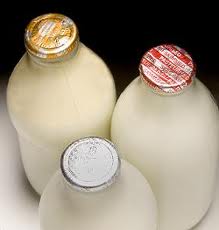
Dairy farmers work some of the longest hours of anyone. Today, a month's rain has been forecast to fall over central England and Wales. And it's been churcking it down on and off for most of June. Just imagine having no choice but to go out and milk twice a day, seven days a week, in this! And then there's the six-feet-per-week dry stone walling one of my farmer friends tells me he has to do to keep his miles of walling in good shape. I recently met a farmer's wife who had broken her arm - no time off work for her, she simply had to adapt the way she milked and get it done. The price paid for milk by the large supermarkets simply does not cover the cost of production. And of course the biggest companies are able to influence the market heavily. Smaller farms (and some not so small) are going under week by week. The glorious variety of the British countryside, not to mention its stewardship, which most of us take very much for granted, depend on the survival and health of farms as solid businesses, large and small. If you would like to support your local dairy farmers, please take a moment to consider signing this petition

Dairy farmers must be paid more for their milk - e petition
http://epetitionsdirect.gov.uk/petition6424

For a discussion of the issues
http://fwi.co.uk/articles/06/07/2012/133803/Jim-Paice-on-milk-and-CAP-live-QampA-transcript.html

Sunday, 1 July 2012

Bioethics at the Cathedral

Photograph taken from Ripon and Leeds Diocesan website

Very much looking forward to the Rt Revd Dr Nazir-Ali's lecture on 'Bioethics and Respect for Human Persons'  in the St Wilfrid Lecture series at Ripon Cathedral on Thursday evening (7pm). I've been immensely interested in this whole area of bioethics and genetics ever since working at Addenbrooke's Hospital, Cambridge in the 1980's where the Medical Research Council labs were producing new techniques and possibilities in response to clincal situations faster than the ethicists could address the issues such techniques raised. The clinician's dilemma is different from that of the rest of society in that he or she is both under an obligation to do the best thing possible for an individual patient and under an obligation to wider society to deliver practices that are in accord with the health of society as a whole. And, of course 'society' does not tell you what it thinks with a united voice. It therefore becomes immensely important that scientists, clinicians and members of wider society do the work of thorough ethical discussion and decision making with some urgency and according to strict rules and transparent processes. An evening not to miss, I think! 

For more information including a brief biography of Dr Nazir-Ali, go to the Diocesan Website

Friday, 22 June 2012

Marriage

With all the talk about marriage that has been going on in the wake of the 'Church of England' statement about same sex marriage, I thought I would find out a bit more about the history of marriage. My sense is that it has evolved as an institution over time in ways that would scarcely be recognisable to our ancestors. Almost everyone you talk to seems to have some 'ideal' in their heads that probably either never existed or was in vogue only for a relatively short period of history. We are especially prone to hark back to a Victorian ideal of the family while overlooking the large number of women who chose to live together and the large number of people who had extra marital affairs and raised two or more families.

Society's understanding of marriage has continually evolved, as has the relationship of marriage to both state and religious life. Clearly, in Old Testament times, wives were the property of their husbands; this view has prevailed in many societies across many centuries -in English law, until the Married Women's Property Act of 1882, a man and a woman became a single entity in law on their marriage and all the woman's property was surrendered to her husband - she needed his consent to make a will. For much of history, the family has been patriarchal, organised so that male progeny could be identified and enabled to inherit, while today many would argue that it is more dominated by the developmental needs of children. At many periods of history (and still, today, in a few societies) women have married as early as 13 or 14 while at other times, notably in England in the eighteenth and twenty first centuries, the avergae age for marriage for both men and women has been the late twenties. In the Mediaeval period, common law marriage was very widely practised - two people needed simply to state their intention to take each other in marriage, until the thirteenth century, without even the presence of witnesses. The Marriage Act of 1753 brought common law marriage effectively to an end but, still, during the industrial revolution and into the twenthieth century large numbers of couples simply co-habited, often for life, without any formal ceremony, and this remains the case today. Marriage has moved from being seen as primarily a legal contract to being understood as primarily an affective union. It has been viewed as being largely about procreation at times, and equally about companionship at others. It has been seen as a covenant between two people, as a covenant between God and a couple and as a sacrament. 

Marriage has been and is, at times, regulated by the church, mosque, temple or synagogue and at other times and in other places it has been and is regulated by the state, with those who choose to solemnise their marriage through the ceremonies of their religion doing so in an additional ceremony.

It therefore seems odd for the Church of England to overlook this complex history and to be defensive when the state wishes to consult about the status of marriage. The situation seems far more complex than is suggested in the recent statement to which so many have responded 'not in our name'. I would like to see a much more thorough and widely-consulting debate of the whole issue of marriage. I am not sure that we know who put the so called Church of England statement together, but it can be read at 

http://www.churchofengland.org/our-views/marriage,-family-and-sexuality-issues/same-sex-marriage.aspx


What do you think?

Tuesday, 29 May 2012

Orwellian Worries

Apparently, the Information Commissioners Office investigated Google in 2012 and received assurances that the company was not intentionally collecting personal information about people in the UK. However, during the course of the investigation, it did become clear that the company has the capacity to intercept and store information from the content of e mails, chatrooms and other social media sites and photographs. Now, the USA Federal Communications Commission has published a report (about a month ago) that suggests that the street view software, gstumbler, used by Google to collect information such as that needed for maps, was in fact, designed to gather information of a personal nature and has the capability to give rise to data bases which could support future Google products. Google's stated strategy has long been to tailor the information it gives its users ever more personally. Just what does Google know about our buying habits, travel patterns, financial transactions, friendships and illneses? In particular, networks that are not secured by passwords are vulnerable. Of course, we're not talking about knowing in the sense of indiviual people knowing things about other individual people - we're talking, perhaps more worryingly - about the power of vast amounts of knowledge to shape behaviour. 

Frankly, in a digital age this kind of thing is unavoidable. The garnering of personal information needs new types of policing and we need draconian penalties for those who misuse rather than simply collect data. The most worrying areas are finance and medicine. Although I cheerfully use digital communication for most things, I am a Ludite when it comes to banking. Not for me the trust that hopes that online (or worse mobile phone) arrangements will hold: give me a passbook in my hand and a personal conversation over the counter any day! In the medical field, I  have a friend who went to the doctor for a routine blood check and was refused on the grounds she'd already had it done. Investigation showed that someone, somewhere had fed someone else's blood results into her records. Mental note - if your doctor tells you something a little strange, check, check and check again!

However, the main point of what I want to say is that in a digital age where we all enjoy so many of the benefits of instant access to information, we each have to accept some responsibility. In fact, we retain much of the power to decide what we reveal, say and do online and what information we are willing to give about ourselves. Saying 'no, I won't give you that information,' may mean we can't have something but is that necessarily a problem?  Ingenuity can usually find a way round it. Or perhaps we don't need something as much as we think we do! We don't have to shop or bank online and we don't have to take the slightest bit of notice of adverts (I don't even read them). Above all, we have the power to control what we say: to ensure it's courteous and doesn't name others or drag them into digital places they don't want to be in and have no control over. Time is a crucial factor in retaining the power to regulate ourselves in digital space. As everything speeds up (banks say that people now expect immediate responses to requests for mortgages and loans, for example) we need to cultivate in ourselves and our children the resilience to resist the immediate. Take a space to think. Cool off overnight. Withdraw from a site. Restrain yourself from responding if you don't really need to. And keep challenging - asking qustions, 'Why do you need to know that about me?' 'Where did you get that information from?' 'Why is that linked to this?'

Saturday, 28 April 2012

A New Economics

I've just finished a stimulating read, Prosperity Without Growth; Economics for a Finite Planet by Tim Jackson (Earthscan, 2009). Described as 'one of the most outstanding pieces of environmental economic literature in recent years', the book asks, 'What does it mean to live well within the confines of a finite world?' Science, industry, digitalization have all brought great advantages. We live longer, we are healthier and better educated and we have a much greater diversity of opportunity than we would have had 100 years ago. And yet...

Even on conservative estimates, 2 billion people are undernourished or lack clean water. A study by Sheffield University (Dorling et al, 2008) shows that, although incomes have doubled over a 30 year period, there has been an erosion of geographical (ie. location-based) community which means that the loneliness index has increased to such an extent that even the weakest communities of the 1970s were experienced as more supportive than the strongest communities of today. It seems we can neither sustain the planet so that all can live nor find happiness ourselves in the societies of the over-developed world. Ben Okri (The Times 2008) puts it well, 'Material success has brought us to a strange spiritual and moral bankruptcy. Our false oracles have failed and we need a vision to live by.'

Jackson's book sets out a thesis for how we can 'flourish within limits'. He debunks the rampant materialism that governs Western economies with its underlying dependence on shaming us into wanting to buy more and more. Shame? Well, yes. Which of us has not wanted to acquire more because of that casual remark, 'Oh, you don't use an i-pad?' 'Oh you're not going to get a new dress for your son's wedding?' 'Ah, you're still driving that?' Just as a poor worker might spend money he can ill afford to have a decent shirt for work, we all feel shamed into keeping up with others or at least keeping up enough to be in the swim of things and to know what's going on and what people are talking about. In the most affluent economies, where differences in wealth are the greatest, Jackson argues that this dynamic of 'shaming' has got so out of control that non-materialistic values are ceasing to impact on the way society is organized. We consume too much, we do not value the contribution made to society by workers who care for those who do not produce wealth and we force anyone who does not want to consume so much to make choices that lead to their partial exclusion from mainstream society (try living without a car, computer or mobile for a month.)

The book examines different types of capitalism and market-driven economics and shows how these relate to sustainable solutions to economic organisation. It attempts to make suggestions about how we could become more value-driven and less consumption-driven. If long term commitment to our near neighbours and global partners were to replace laissez-faire, short-term gratification, Jackson argues, the end result would be greater fulfilment and happiness for us all and we would prosper much more. I would argue that what Jackson says chimes in very well with what I have always thought of as 'Kingdom of Heaven economics' (or the evidence in scripture for the ways we ought to look at economic growth).  The first principle is generosity - share, talk, discover values that unite, develop trust. Wealth comes in the guise of enough - enough to live, to share, to do what is needed in our own communities and not to damage the earth by over- consumption.

I'm very grateful to the Buckfastleigh Abbey (Benedictine Community) bookshop where I chanced on this rich volume; it's a complex and wide-ranging book which covers economics, family politics, psychological motivation, social organisation and much, much more as it stacks up the evidence for its central theme, namely, that, if economic growth based on escalating consumption continues to be the sole basis for delivering prosperity, then inequity and unsustainability will be the twin forces that bring the future of humanity to the brink of annihilation. The evidence presented shows that 'more stuff' does not mean 'more happiness' and 'business as usual' is not an option. The need for a new economics is pressing. Growth is surely needed in under-developed parts of the world but, in the over-developed countries, we need a radical programme, economic, educational , social and, of course, political, that is motivated by the benefits of having less. That's the NOW challenge - what could you do to use less, to have less, to share more and to enjoy yourself more? What would you like to be free of and free for? What would travelling lighter be like? 

Sunday, 18 December 2011

Prime Minister Praises Biblical Values

So the Prime Minister likes the resonances of the King James bible and believes that values that come from the bible should shape our society! Christians should hold their heads up high, be confident and contribute to public life. David Cameron was speaking at Christ Church Cathedral, Oxford as part of the celebrations for the 400th anniversary of the King James bible.

Well, it was an interesting and perhaps unexpected speech. It was refreshing to hear a senior politician acknowledge the central place that religion has had and still has in shaping the moral landscape we inhabit. Secular neutrality and the pretence that religion can simply be assigned to the private sphere don't measure up - they collude to tell a story about society that is untrue and misleading. Mr Cameron clearly sees crises like the recent riots in London and other cities, the MPs' expenses scandal and the collapse of parts of the banking system as symptomatic of the growing absence of a commonly accepted moral code or any sense of accountability based on coherent moral principles. And he seems inclined to look to the Church of England as well as other faith communities for help to find a set of values which will restore Britain to 'a nation whose ideals are founded on the bible' to quote Margaret Thatcher. He challenged the Church of England to be more vocal and also to be sure that it speaks to and for the whole country (he had a little go at us for our non-inclusivity) and even went as far as to say that 'the values we draw from the bible go to the heart of what it means to belong in this country.'

What are these values? According to Mr Cameron they include responsibility, hard work, charity, compassion, humility, self sacrifice, love and pride in working for the common good and honouring the social obligations we have to one another and to our families and our communities. In many ways commendable, but not all values I necessarily think come straight from the bible - or at least they don't necessarily pick up on the rich complexity of biblical morality or the priorities we find in scripture. Love, compassion, humility, self sacrifice, yes, but what about care for the marginalised, the call to care for those beyond our families, sometimes even at cost to our families, radical forgiveness of an enemy and prophetic challenge to institutions? These themes take up a large chunk of scripture. And I'm not sure I recognize pride in anything, even working for the common good if you can identify it, as a biblical value. The trouble with Mr Cameron's approach to Christianity or more specifically the bible is that it rather sounds as though he has made up his mind about what he means by proper ethical values and then looked at the biblical text to find support for them. It's a bit fuzzy about the actual content of the bible.

Now don't get me wrong. I am delighted that our Prime Minister took the opportunity to articulate what he personally finds relevant in the Christian tradition.  And perhaps especially delighted that he acknowledged a place for faith perspectives in public debate and in the ordering of the life of our country. But I think his speech showed him falling into the same trap that so many people who say 'we should get back to Christian morals' fall into. 

You can't have Christianity or a biblically shaped view of morality without the content, the commitment and the disciplines of the tradition. I would go so far as to say that I think religion can be quite damaging when we just pick the bits from tradition or scripture that support the beliefs we have anyway or would like to have. Because then we are taking fallible human wisdom and calling it the wisdom of God, investing it with a power that it has no business to have... and we all know where that can get us. People of all faiths know this. Secularists and religious dabblers usually overlook it. 

The hard fact is that the secular agenda has now taken the people of Britain so far from any serious engagement with the Christian tradition that most people really do not know what the content of the Christain faith is or what moral demands and disciplines the scriptures make. And of course these are very complex, can be apparently internally contradictory and are open to diverse interpretations. Perhaps most seriously, many people entirely miss the fact that at the heart of Christianity is a profound relationship with God, not a set of moral imperatives. The moral codes of religion that politicians so much like to talk about really don't work and can become ugly tools unless they arise out of a relationship grounded in worship and a sense of awe about who God is.

Perhaps I can put it like this - you wouldn't join a political party or a sporting or artisitc movement unless you were going to find out what the underlying principles and activites were and practice them until you were familiar with them! At least, if you did , you would probably acknowledge that your membership would not have very much meaning. So-called Christian morality only gives value in society when it is practised in a disciplined way by people of faith. We can  no more wake up one morning and decide to put society right by adopting some parts of 5,000 year old scriptures (written in languages and for a culture that we do not readily understand) than we can put society right by becoming Marxists or Keynesians and not reading Marx or Keynes. Christian morality comes of a steady, profound, lifelong engagement with all that the Christian tradition has to show and teach. It demands willingness to worship and pray, to wrestle with doubt and complexity and to be continually changed by what is grasped. So, while I partially welcome the Prime Minster's speech, I do so with some reservations. If Christianity is going to have an impact on future society in the way he suggests, two things are needed. Firstly, people who are willing to engage with the content of Christian faith rather than simply to use the Christian faith to justify the way we live anyway. (And this takes time and real commitment and immersion in the tradition.) And secondly, a relationship between people of faith and secular society that fosters two-way respect. People of faith must show that they can be trusted, that they try to live according to their beliefs especially concerning love, care for neighbour and forgiveness, and that they have the welfare of those who do not share their faith at heart. Secularists should have a care not to cariacature people of faith but to discover where they have values and ways of working in common with those who live by belief in God and transcendence.    
     

Thursday, 11 August 2011

Riots on British Streets

In some ways the riots of the last few days seem far removed from rural North Yorkshire. But we've been looking and listening and, like everyone else, trying to make sense of this startling and bewildering development in our national life. Several members of my family live in Nottingham where 5 police stations were fire bombed or pelted with bricks and missiles and where our friends, and especially some of their children, are now nervous about going out just to do everyday shopping.

http://www.bbc.co.uk/news/uk-england-nottinghamshire-14472172

What are the reasons for the riots? It's too early to know which of several possible factors were the decisive ones in turning our streets into arenas for violence and looting. Tragically lives have been lost but the main focus seems to have been property. The reasons that are being given are
  • criminality - but why? and why now?
  • breakdown in family life and the morality and discipline that good parenting and schools provide.
  • rampant consumerism - an attitude that pervades the whole of society and which says 'I should be able to have what I want now.'
  • disenfranchised groups in society - people brought up in a consumer society with little opportunity to make choices and become legitimate consumers themselves.
  • reaction against the police and against law and order - a desire by the voiceless  to take power by showing that they can break the law if they choose to.
  • the atmosphere created by government cuts and the threat of the breakdown of our whole economic system which lurks behind our present lived reality. 
  • the new era of tweeting, twittering and facebook and other forms of messaging which allows riots to be spontaneously organised with hundreds of people gathering in one place at a particular time - something that could not have happened until recently. This is the more sinister side of Internet democracy, perhaps akin to what we have witnessed recently in Middle Eastern countries. 

Probably, the true reasons for the riots are drawn from all these and from other factors that have not yet been identified. The court cases yesterday and today show that plainly this urge to violence and anarchy is not a problem confined to young people or to people who are unemployed or uneducated. Politicians seem to be falling into two camps - on the one hand, those who want to attribute it all to criminality, brook no excuses and deal with it through punitive measures and, on the other hand, those who want to find the social causes and who are fearful of punitive measures such as long prison sentences, stopping benefits and withdrawing housing as these will fuel discontent. I saw Harriet Harman on Newsnight vigorously trying to argue that both approaches are needed - a response that punishes lack of individual responsibility and a response that looks at the social forces that have made this possible and, for once, I agreed with her! 

Well, it is too early to make judgements about why all this has happened - summer madness of the most sobering kind. The worrying question is, 'Is what we have seen just the tip of a very ugly iceberg which now underlies the waters of normal social dealings in this country?'  Three things which have been concerning me for a while are not, I think, unrelated to what has happened.

Firstly, there is now greater disparity between the wealthiest and the poorest in Britain than in any other country in Europe. People are living in real poverty cheek by jowl with those who have vast resources. In the parish where I served in the early 90's in Nottingham, I can take you to places where teenagers live ferral on the streets, the care-home system, never mind their families, entirely unable to contain them, young children are so hungry they hang around the chip shop bins and eat discarded food, and homeworkers do menial jobs like assembling hangers - a house full of women working all day for perhaps £15 to be divided between them. These people are not lazy. Prositution and the drug culture are rife and are a normal part of middle class life but destroy the lives of those who are unemployed or poorly educated and who often service these habits. Within sight of parts of the parish are hotels where you can spend £800-£1,000 for a night's stay. Poverty was not the direct cause of the riots, but huge disparity between the resources available to people generates anger and lack of respect in different ways from different parts of society and the riots have played into this. The fact that groups within society are living with poverty, hunger and lack of opportunity that most of society does not acknowledge or appear to care about points to a deep degree of unhealthiness in our social order. It is wrong when we simply care about what we have got and whether we have got what we want, right now. The rioting and looting demonstrated that, in fact, this is exactly how some people from all parts of society think today.  

Secondly, in many familes and communities right across the social classes we seem to have lost the ability to exercise discipline with quite young children; the seeds of an attitude that says 'I am entitled to whatever I feel like...' are planted well before secondary school. At the same time, adults, apart from professionals who work with young people, often don't seem able to engage in conversation with and listen to youngsters - you have been able to see that in some of the interviews over the last few days where rioters and their supporters have been asked their opinion only to have it dismissed and shouted down. Where respect and real listening don't occur, problems cannot be solved. Even if someone has committed a crime, we have to try to understand what the world looks like from their perspective if we are going to take measures to prevent the same thing happening again. There is a worrying lack of willingness for different age groups to listen to one another and I think this is a growing phenomenon. 

Thirdly, we do not yet have systems of politics, government, law and order and communication that have adapted to the presence of the Internet. We do not yet realise the degree to which the Internet has changed, for ever, the nature of authority, democracy and control in society. People can now circumvent much of what formal education, politics and even the media have to offer and they can form local and global alliances which have nothing to do with recognised social or political structures; they can just as easily disrupt conventional alliances and systems. They can do this very speedily and in unpredictable ways. I suppose all this is one reason why I blog. I think it is important to learn, first hand, about the power of the Internet and of digital communication. We are all on a very steep learning curve to discover how power operates in a world where, if you just hit the right tone, you can bring 100's or 1,000's of people of all ages and backgrounds together to achieve something very noble or something very ignoble...and the outcome may indeed be frighteningly unpredictable.  
  

Friday, 14 January 2011

Education for Women in Afghanistan

I welcome the news, yesterday, that Farooq Wardak, one of Hamid Karsai's ministers, has reportedly said that the Taliban are lifting their ban on education for women and girls and that this indicates a cultural and behavioural shift on their part. They have not (and probably will not) anounce anything themselves but this statement seems in line with the fact that, since the draconian bans in the 1990's, there has been a drift back to educating girls at the insistance of local populations. For example, in Chadara, in the Taliban dominated Kunduz province, there are said to be a considerable numbers of girls' schools.

Western feminists and campaigners for women's human rights are often accused of misunderstanding Islamic culture and trying to impose unwanted patterns of behaviour on a culture they don't appreciate and which is far more subtle and nuanced than we, in the West, often understand. There are values about community and family and about educating the sexes separately that are at odds with the values of a liberal western democracy. I  hope and pray that any peace deal which is eventually done in Afghanistan does not, in practice, jeopardize the access of women to education and health care and does not threaten their ability to earn a living or curtail their access to a justice system that defends them from abuse. It is vital, therefore, that any such peace process is shaped by the educated views of the women of the region and that their voices are heard. Peace processes that are negotiated and imposed on the women of Afghanistan by all male groups, or by western diplomacy are not going to work. So, a return to education for all girls is, at least, a step in the right direction.

Societies and groups where decisions about the way general life is ordered are made without the direct contribution of women seem to me to lack a roundedness and a charity and, often, to overlook information and perspectives that are pertinent. We have plenty of examples of this in the Christian churches down the ages. Yet the wisdom tradition within the Judaeo-Christian tradition has always portrayed Wisdom as both male and female and has imaged Wisdom as a woman, in a way that gives as central a place to specifically female concerns and social perceptions as to those of men. 

For more information about women in Afghanistan
www.womenforwomen.org/ Put 'Afghanistan' in the search box (near the bottom of the page) - this brings up lots of articles.

Help women in Afghanistan
www.womenforwomen.org/global-initiatives-helping-women/files/Afghanistan-Country-Sheet.pdf

Did you know that U.N. Security Council Resolution 1325, passed on 31st October 2000 calls for women to participate equally in all processes of conflict resolution, peacemaking and reconciliation?   


Saturday, 8 January 2011

Grumpy Old Woman?

January seems as good a time as any to have a bit of a moan about how life is changing! Or at least to express some concern about what kind of values are creeping into our everyday dealings. Am I getting too old to adapt or should I be worried? I have encountered three things which have given me pause for thought recently.


The first was reading a report that the Musicians' Union have given advice in a training video that touching children can expose teachers to charges of inappropriate behaviour and therefore teachers should avoid all physical contact with pupils. Although some music teachers now insist a parent is present for lessons, many may be in one to one situations with pupils. I can understand the dangers both from the child's point of view and the teacher's. However, I just can't see how you can teach things like how to hold an instrument or a bow, or hand and arm positioning, or aspects of breathing without ever making physical contact. This is madness! Michael Gove, the education Secretary, accused the MU of playing into (I'm not sure if he intended a pun?) a culture of fear. What is our increasing fear of any contact at all outside (and sometimes even inside) the family doing to our children, to their spontaneity and creativity, to their emotional development, to their proper, healthy sense of being at home in their own skins and bodies? Medics and hairdressers, therapists and coaches find ways to ensure that physical contact can be monitored and professionals trusted or chaperoned. Touch is one of the five senses. Without it, we experience sensory deprivation. Isn't it time that we made sure we employ it properly in education too, so that children can be taught skills appropriately, comforted when they need it and, above all, so they can learn to be physically confident and spontaneous? 


The second incident occurred when I learned from a friend that large quantities of well stored, unopened and unused nursing equipment and sealed medication could not be returned or re-used when no longer needed. The remote possibility of tampering, whether deliberate or accidental, renders all these extremely costly resources fit for nothing other than scrapping. As I surveyed the boxes, I couldn't help feeling that there is something deeply wrong with our priorities. Is it the threat of being sued that makes the unlikely possibility that hygeinically stored and re-used equipment will cause harm carry more weight than the scandal of throwing away costly items that, in many countries, would be gratefully used? The drugs industry is deeply dependent on oil and contributes a great deal to the twin problems of the peak oil scenario and carbon emission. I quite see that there are issues around infection control but, as with my first scenario, I object to an approach to the problem that refuses to see the sheer madness of the situation and accepts waste without question.

Visitation
The third scenario was described to me; in a secondary school class, the students had been talking generally about greeting people and being helpful and how far you could reasonably be expected to go, in the context of Jesus' sayings about going the extra mile and sharing the coat on your back. The teacher's comment was that it was OK to do these kinds of things in school, but they should be avoided out of school. Again, one immediately sees where the teacher is coming from in terms of protecting children from strangers. But these were 15-16 year olds and I find myself asking, is there a point at which it becomes too late, or at least very difficult, for people to reconsider the habits of non communication which are being so well taught, early in their lives, for protection? How and when and where do people move into a zone where they may choose to question some of these values? They may decide for themselves that spontaneous communication with other people, with the risks that always involves, is a vital part of what it means to be human and to respond to the humanity of others - a means of deep joy and unexpected friendship?  

Of course, I can see both sides in all these situations but my gripe is about what all this adds up to. I don't relish living in a society that (a) fears and abuses touch, (b) removes all risk to our own wellbeing at the expense of the environment and of other people who live in places where resources are scant (c) supresses and teaches people to avoid natural communication even where there is an element of help or kindness.