Showing posts with label Ripon Cathedral. Show all posts

Wednesday, 28 November 2012

Space at Ripon Cathedral

Ripon Cathedral is hosting a new series of full day retreats and monthly evening meetings to explore spirituality and meditation. These will run throughout 2013/4.


SPACE will offer a day-long retreat based on a particular theme such as Wonder, Compassion, Journeying. The day will involve stillness, reflection and guided meditation.

SPACE BETWEEN will be a monthly evening meeting offering time to explore, as a group, the meanings, values and beliefs associated with the theme of the SPACE retreat days. There will also be time for stillness and meditation.

Come to some or come to all - create your own journey. 

There will be a taster session for SPACE on Saturday 19th January 2013 at Thorpe Prebend House, Ripon HG4 1QR from 10.30 - 12noon. For more information
e mail SPACEripon@gmail.com or ring the Cathedral office on 01765 603583


Saturday, 21 July 2012

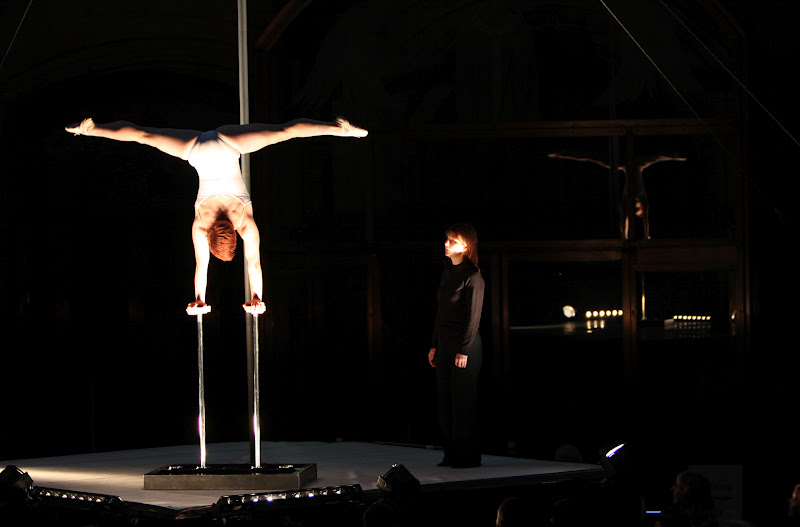
How Like An Angel at Ripon Cathedral

Bringing together Circa and I Fagiolini, two inspiring groups of artists in contemporary circus and vocal music. The third partner in the performance is the unique architecture and history of each cathedral where it is performed.

CIRCA originates in Brisbane, Australia, bringing us a daring new vision of circus, blending bodies, light, sound and artistry - this is the human body at its extremes of endurance, strength and versatility. 'Stunning., heart-stopping, unbearably beautiful.'

I FAGIOLINI is a group of vocal musicians rooted in the repertoire of the Renaissance and Baroque periods but also performing contemporary music. The sound moves around the building (as do the performers) and the quality of each individual voice and of the ensemble is arresting. Renaisssance polyphony at its stunning best in a building which lends itself to the form.
To hear a promotion for I Fagiolini's new show Tallis in Wonderland and to gain an insight into the aural quality of this performance go to

Circa Director Yaron Lifschitz
I Fagiolini Director Robert Hollingworth

Photos from Ripon Cathedral David M. Challoner


Sunday, 1 April 2012

Ripon Cathedral as Never Seen Before


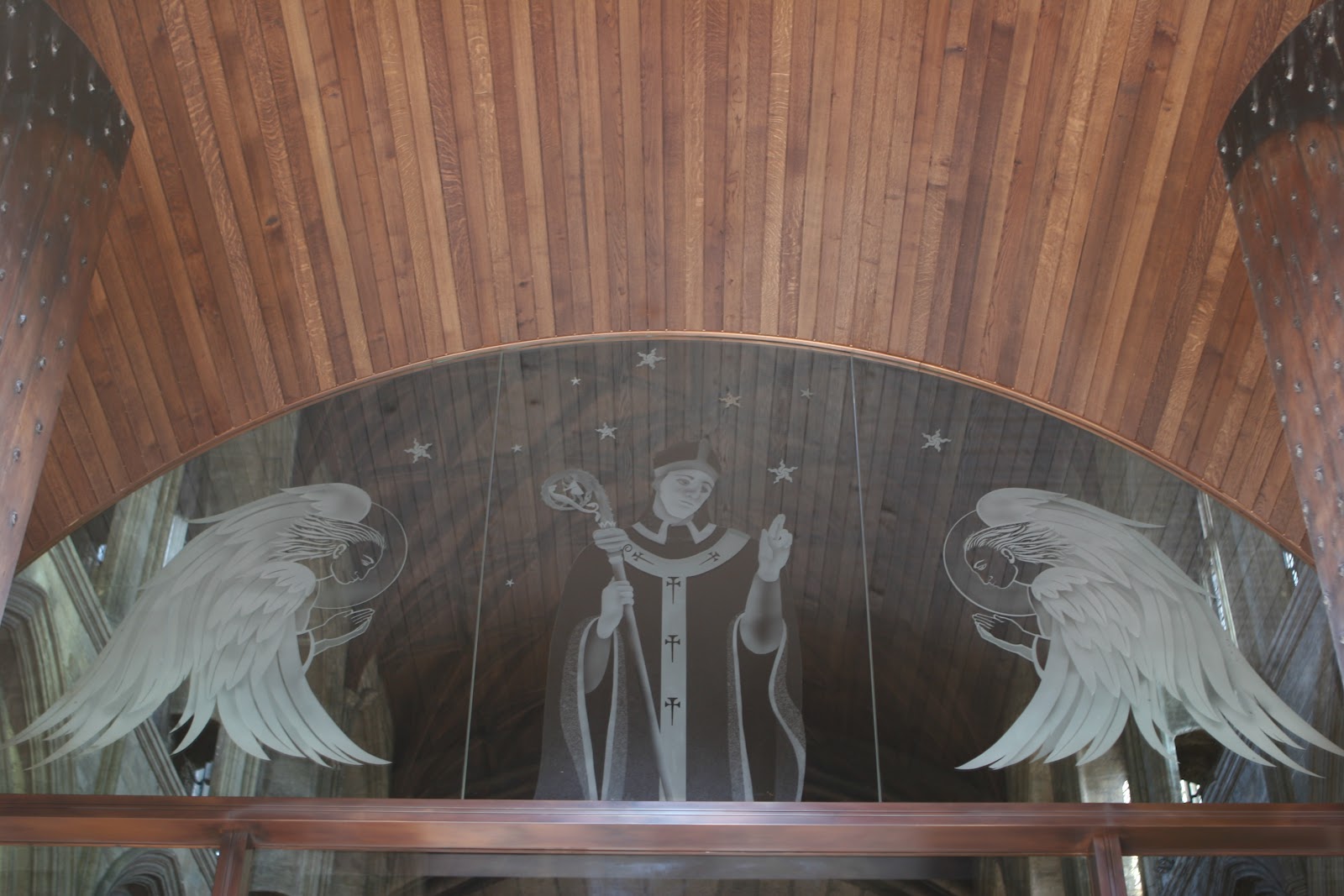
 Ripon Cathedral has completed its Narthex project in good time for Holy Week. The new internal glass porch and doors mean that light now floods into the West end of the building and the interior of the cathedral can be seen from Kirkgate making it much more welcoming to the approaching pilgrim. Regular worshippers are seeing features of the building they have never noticed before! If you are near enough, come and see for yourself - the effect is stunning! The contractors were Anelays of York, the architect is Oliver Caroe of Caroe Architecture, Cambridge and the artist who designed the etching on the glass panels above the doors is Sally Scott. The panels were executed at Nero Design Studios, London. The etchings depict the life of St Wilfrid. For more photos, reaction and comments visit

for the story of the project, visit


Friday, 24 February 2012

Clare Short on International Development and Aid

Clare Short MP

Clare Short gave a very interesting lecture, last night, which kicked off the 2012 St Wilfrid Lecture Series Questions of Right and Wrong at Ripon cathedral. The gist of her argument was that giving development aid alone is not enough, to be both effective and morally pure, it has to go hand in hand with foreign policy and a development policy which puts the needs of the country to which aid is given before the gains of the country giving aid. She gave us many examples of aid which is tied to trade and aid which is less effective than it could be because each donor country imposes conditions of their own which may look nonsensical on the ground. (For example where three separate countries give ambulances and spare parts from their own country, making it difficult to run the ambulance service coherently.) 

A foreign policy which creates markets in which developing countries find it difficult to participate or which promotes the sale of arms to unstable governments negates the positive effect of aid. Aid which simply provides a service and then withdraws is not really going to solve a country's problems - much better to work with local projects to educate and empower local populations. Where governments are corrupt, it may be better to give aid to local leaders who will ensure that it is used to transform their own community. These were some of the many challenges to change our approach to aid about which she spoke. There has, she stressed, to be a coherence between policy and, local strategy and action, 'You can’t be doing the wrong thing over here and the right thing over there.'

She used Jesus' parable of the sheep and the goats to reflect on the moral imperative to give aid but said that she would understand the threat of hell, about which the parable so graphically speaks, as continuing to see a conflict ridden world of suffering in which we draw a protective circle around ourselves and what we have in order to protect ourselves from the turbulance, trouble and terrorism that will undoubtedly overtake us if we do not learn to share resources and live in sustainable ways. Moral imperative and intelligent self interest are thus brought together; she gave lots of examples of how governments fail to grasp this.

The lecture was peppered with insights from her years as Secretary of State for International Development and from her struggles with both the Blair government and the Cameron government to get them to adopt consistent approaches to foreign policy and aid. She is certainly a politician who 'walks the talk', often to her own cost - a thinker who knows the subtleties of her own field and is therefore able to speak with authority.

I look forward to the rest of the series. menawhile, if your conscience or interest has been aroused by any of this, you might like to look on the Africa Humanitarian Action website http://www.africahumanitarian.org/  whose whole approach to aid is based on sound scholarship and a holistic approach to what are usually complex situations.

Tuesday, 18 October 2011

Inspiration for Bible Sunday

This Sunday is Bible Sunday. The parish where I served in Nottingham, Nuthall St Patrick, was the home of one of the protestant martyrs associated with the Reformation movement to make the scriptures available to people in English. Anne Ayscough (sometimes written 'Askew') lived, for a time, in the small village of Nuthall. She married Thomas Kyme, a Lincolnshire farmer, and had two children. She believed that the ordinary people should be able to hear the scriptures read in their own language. She herself read from the bible, in English, at a lectern in Lincoln cathedral and she became a public preacher. Eventually she was caught up in the unsuccessful plot to have Catherine Parr (Henry VIII's last wife) branded a traitor for religious reasons and she was racked and burned at the stake aged around 26, having refused to give the names of her alleged accomplices. Her story is told in Foxe's Martyrs.

Sitting in the quiet twelfth century church in Nuthall, I used to wonder how such an ordinary girl could have sustained such a passion for people to hear and know the Word of God through the scriptures. In her own way, she took up a cause that she believed would make a contribution to the faith of the ordinary folk of the church at a time when national debate was raging around the Reformation issues we understand through the eyes of hindsight today. Where did her commitment to the cause come from? How was she educated and what well-springs of personal courage saw her through her terrible ordeal? What happened to her children? What did they know of their mother's cause and the sacrifices she chose to make? Not very much is known about Anne and the questions that hang in the air are more tantilising than the facts we have. Her intelligence, theological knowledge and bravery under interrogation and torture were legendary.

At Nuthall, a local farming family gave the lectern bible to the church; as they said, the farmer works to bring bread to people and so it was also appropriate that they should provide knowledge of the true bread of life (one of the ways Jesus refers to Himself in scripture) by giving the bible that was read at very service. The lectern was a particularly poignant symbol in St Patrick's Nuthall, a place where many generations were reminded of the cost of having the scriptures available in translations that everyone can understand.

To read Anne's very moving story, see http://en.wikipedia.org/wiki/Anne_Askew

To celebrate the 400th anniversary of the translation of the King James Bible, a special evensong was held at Ripon Cathedral last Sunday at which the preacher was the Very Revd Dom Henry Wansbrough, a biblical scholar and a Benedictine monk from the community at Ampleforth Abbey. To read about this and to see photographs of the 1611 and 1613 ('Judas') bibles owned by the cathedral Chapter, see
http://www.riponleeds.anglican.org/news-414.html

Friday, 7 October 2011

All Saints at Sharow


All Saints Day, this year, is 1st November (a Tuesday) so many churches will be celebrating  on Sunday 30th October. At St John's, Sharow, there will be a special All Saints Celebration for all the churches of the Ripon cathedral benefice. This will be at 6.30pm. Singers from across the benefice are invited to join together to form a choir for the service. The conductor will be David Andrew and there will be two rehearsals at 7.30pm on Tuesdays 18th and 25th October. Just come along and join in if you'd like to sing. The service itself is open to everyone and is a particuarly meaningful way of remembering and saying 'thank you' to God for all the people who have influenced your life and whom you love but who are no longer with us. You can also suggest a favourite All Saints hymn by filling in one of the forms available at the back of any of the churches in the benefice. (Bishop Monkton, Burton Leonard, Littlethorpe, North Stainley, St John's Bondgate, St Mary Magdalene, Ripon or Sharow itself.) One of my favourite hymns is

Ye holy angels bright,
who wait at God's right hand,
 or through the realms of light
fly at your Lord's command,
assist our song,
for else the theme
too high doth seem
for mortal tongue.

Ye blessed souls at rest,
who ran this earthly race,
and now, from sin released,
behold your Saviour's face.
God's praises sound,
 as in His light,
 with sweet delight,
ye do abound.

Ye saints, who toil below,
adore your heavenly king
and onward as ye go,
some joyful anthem sing;
take what he gives
and praise him still
 through good or ill,
whoever lives.

My soul, bear thou thy part,
triumph in God above,
and with a well tuned heart,
sing thou the songs of love; 
let all thy days,
till life shall end,
whate'er he send,
be filled with praise. 
Richard Baxter 1615-1691
and John Hampden Gurney 1802-1862

Here's a thought for the season from Hubert Northcott CR in his book The Venture of Prayer, London 1954 (p.53)

'Perhaps one of the joys reserved for us hereafter will be to learn what became of our intercessions, and to meet the souls they supported in time of need. And, for ourselves, there will be the joy of meeting those who have prayed for us and so of realising from a new angle our share in the Communion of Saints.'

Thursday, 14 July 2011

Ripon Summer Organ Festival


Ripon Cathedral's Harrison Organ
 For those who like organ music, there is a treat which spreads itself out across July and August. Come to Ripon cathedral at 7.30pm on a Tuesday night (you can have a really good meal in one of the bistros on Kirkgate or in the market square beforehand) and enjoy a feast of music! The recital which really intriques me, this year, is on 9th August when Josephine Peach and Edmund Aldhouse will play a programme of music for piano and organ. Not two instruments we necessarily associate with one another! The programme includes works by Stanford, Jongen, Messiaen and Vierne for either piano or organ - it will be interesting to compare the way the same composer writes differently for the two instruments - and a rare Concerto for organ and piano by Flor Peeters. I don't recall ever hearing a concerto for both together. 

The other recitals are 19th July - John Scott (St Thomas, Fifth Avenue NYC) 
                                26th July -  Edmund Aldhouse (Ripon Cathedral)    
                                2nd August - Andrew Bryden (Ripon Cathedral)
                                9th August - Josephine Peach and Edmund Aldhouse
                                16th August - James Lancelot (Durham Cathedral).

Please come along and support the appeal for the restoration of one of the best instruments in the country! Tickets £8 in advance, £10 on the door.

(Sadly, I have blogged too late to advertise Robert Quinney's recital which introduced the series on 12th July. Quinney is sub organist at Westminster Abbey and was the organist for the recent Royal Wedding!)

Monday, 4 July 2011

New Deacons!


Congratulations to the seven new Deacons ordained at Ripon cathedral by John, Bishop of Ripon and Leeds on Sunday morning! We look forward to their ministry in parishes across the diocese. From this archdeaconry - Bernadette Hegarty at High Harrogate St Peter, Anthony Kirkby at Richmond St Mary's with Hudswell St Michael and All Angels and Downholme St Michael and Marske St Edmund,  and Lynn Thorius with the East Richmond Team Ministry.


For brief biographies of our new deacons go to


As the Revd Canon Jacqui Jones, preacher at the service and retreat conductor reminded us, they have a wealth of experience in many different walks of life which they are laying down in response to a call to serve in the church. They will surely use all that experience in new and different ways but it is a courageous thing to be willing to empty oneself of previous securities in order to minister. Jacqui prompted us to remember that the authentic marks of the church are joy and a share in Christ's sufferings.  
  

Tuesday, 19 April 2011

Palm Sunday Processions

On Sunday, churches all over the area marked Palm Sunday (Jesus' entry into Jerusalem) with processions round their churches or ventured further afield into their towns and villages. You can enter into the moment as it unfolded in Ripon market square by going to the photo gallery on the cathedral website.
 
http://www.riponcathedral.org.uk/news.php?passnews=58

Almighty and everlasting God,
who in yur tender love towards the human race
sent your Son, our Saviour Jesus Christ
to take upon Him our flesh
and to suffer death upon the cross;
grant that we may follow the example of His patience and humility,
and also be made partakers of His resurrection,
through Jesus Christ, Your Son, our Lord. Amen.

Monday, 28 March 2011

New Lay Canon for Ripon


Congratulations to Dr Colin Harrison CBE on being made a lay canon of Ripon cathedral. It is very good to have among the college of canons someone who brings the perspective of a scientist. Since his retirement as a global Research and Maunfacturing Dirctor for ICI, in 2007, Colin has been a member of the Engineering and Physical and Sciences Research Council, Chair of the national Chemistry Innovation Knowledge Transfer Network and Director of the Centre for Process Innovation. (What did he do before he was retired?!) This work, which promotes the transfer of the insights and techniques of science into products and services, will contribute to the establishing of the government's recently announced new Technology Innovation Centres. 

The dialogue between faith and science is so often focused around the 'glamorous' sciences to do with things like cosmology or genetic engineering. It is very good to be reminded of the central place of the physical sciences in contributing to innovations which affect our everday lives and which equally remind us of the ingenuity of the human mind and the wonder of the created order, though they are often taken for granted. I hope that, as well continuing to offer his considerable skills in serving the life of the cathedral, Colin will be able to share some of his interests in science with us as a community. Most scientists are shaped early and need inspiring role models to open their eyes to what is possible. We have had wedding shows and medieval fayres and oral history workshops at the cathedral - how about a science and technology event? After all, the great medieval cathedrals were often places of engineering innovation (first flying butresses at Durham) and associated with centres of healing (the leper hospital at Ely) and education in the science of the day (the carvings at Chartres cathedral include pagan scientists, the  newly discovered plants of the day and a throne on which Christ is seated, carved according to the principles of Euclid's geometry. Chartres was built during a period of relative harmony and creative interaction between the church and the sciences.) 

A fascinating insight into the relationship between gothic cathedrals and science can be seen on


Tuesday, 22 February 2011

Hope in Difficult Times

Those of you who watch Songs of Praise may have seen Loretta Williams, one of the retired Readers from Ripon Cathedral, being interviewed by Aled Jones, last Sunday. In a fascinating snapshot of broadcasting 70 years ago, the programme showed The Revd J.G.Williams (Loretta's husband) leading daily prayer from Trinity Chapel in St Paul's Church, Bedford, to which city parts of the BBC service had been evacuated in the early years of the war. Loretta speaks movingly of the dedication of the clergy who kept daily worship broadcasts going in the most hopeless and difficult days of the war. If you didn't see it, it's at
http://www.bbc.co.uk/iplayer/episode/b00yz9tq/Songs_of_Praise_Bedford
Loretta's interview is about 4 minutes 30 seconds in.

Tuesday, 8 February 2011

St Wilfrid Lectures 2011

ALL LECTURES START AT 7PM

This year's St Wilfrid lecture series at Ripon Cathedral looks exciting. Entitled The Question of God; the Role of Faith in Contemporary Society, the speakers are all national if not international figures - a retired bishop, rabbi, literary critic, post-Christian and Muslim academics and a religious newspaper editor. Sponsored by Ripon Cathedral, the Methodist District of York and Hull, the Diocese of Ripon and Leeds and York St John University, the lectures seek to stimulate cross disciplinary and cross faith discussion and thought. The 2011 programme promises some unique angles on the pressing questions not only for faith but for a multi cultural society.

'In spite of repeated media claims that science has disproved God, God has stubbornly refused to go away. Indeed, during the first decade of the third millennium, the question of God has never been more relevant - not least in terms of global current affairs.'
 

Put these dates in your diary now!  Admission is by ticket but tickets are free and can be booked via judithbustard@riponcathedral.org.uk  Many of the lectures in the past two years have been extremely well atended so book ahead! Each lecture starts at 7pm ends in plenty of time for you to take advantage of one of Ripon's great restaurants or pubs and continue the discussion in convivial surroundings. There is free parking nearby.

Wednesday, 2 February 2011

Candlemas

Tonight it was great to meet with Ripon cathedral ambassadors and music custodians - many people from parishes all over the archdeaconry and diocese who support and take an interest in the life of Ripon cathedral. In preparation for the Candlemas eucharist (Feast of the Presentation of Christ in the Temple at Jerusalem), we meditated on the meaning of Simeon's song - the words spoken over the baby Jesus on the occasion of his presentation. 
Below is the text of the meditation. If you don't like wordy meditations but you'd like to hear Gustav Holst's wonderful 8 part setting of Simeon's Song (the Nunc Dimittis), listen  to it here
http://www.youtube.com/watch?v=GE159jxkWWM
If you  prefer poetry to a meditation, go to the amazing poem of the Russian poet, Joseph Brodsky, with its movement from the physical to the metaphysical realm and its striking image of the power of Christ over death at the end.  
http://blowingajug.wordpress.com/2008/12/24/nunc-dimittis-joseph-brodsky


'The temple enclosed them in forests of stone'
from Joseph Brodsky's Nunc Dimittis
24th December 2008
(web site above)

Meditation

How many times in your life have you heard those haunting words,
'Lord, now you let your servant go in peace,
Your word has been fulfilled,
My own eyes have seen your salvation,
Which you have prepared before the face of all people,
To be a light to lighten the Gentiles
And the glory of your people Israel.'
Luke 2.29-32

What do these words evoke for you? Memories of school? Your favourite cathedral choir? The scents and light of a summer evening? The dark shadows of a winter night? Or you may think of John le Carre's novel Tinker, Tailor, Soldier, Spy and the haunting theme tune from the TV adaption. Or T. S. Eliot's rather dark poem A Song for Simeon?

If you're a clergy person then the chances are you've read those words hundreds or thousands of times as you've led the coffin from the church after a funeral. 'For my eyes have seen your salvation..' the hope toward which life is directed.

What a wonderful text. You couldn't find a richer one, could you? It's three central themes
  • peace - personal and between nations
  • salvation - the hope that God's purposes will triumph
  • glory - the full slendour of God, the shimmering  presence (or 'shekinah,' the Hebrew word) of God among the people.
Almost too rich a gift for the musical imagination, yet what wonderful things composers have done with it down the ages! So where did these ancient words come from? The Nunc Dimittis is one of a set of three canticles or songs embedded in the narratives of Jesus' birth in Luke's gospel. Three early Christian hymns based closely on Old Testament texts yet pointing forward to the future
  • the song of Mary - the Magnificat
  • the song of Zechariah (John the Baptist's father) - the Benedictus
  • the song of Simeon.
Luke's narrative tells us specifically that Zechariah and Simeon were filled with the Holy Spirit and, of course, Mary had just received the angel's news that her life was to be 'overshadowed' by the Holy Spirit, God's Spirit. These wonderful songs and the characters who sing them represent the turning point between the ancient traditions of the Jewish people and the coming of Christ, leading to the birth of the Christian tradition. They form a link between aspects of the old faith of the Hebrew people (notice the reference to Abraham in the Magnificat and Benedictus - the father and symbol of faith) and the expectations and hopes that surround the comng of the Christ or Messiah - the One who would show the people what God is like. The texts of the three songs together in fact sum up most of the Gospel - the good news that Jesus preached and embodied.

Today is Candlemas when Christians all over the world remember the bringing of the infant Jesus into the Temple for his dedication - the occasion on which Simeon utters the words of the Nunc Dimittis. It's a strange story veiled in the mists of time and half forgotten legend. Who was Simeon? Who was Anna? Where did they come from? Why do they seem to have a special prescience - they know things, they see the future. The text tells us that the Holy Spirit has promised Simeon he will not die until he has seen the Saviour. This strange story is pervaded throughout by the Holy Spirit who is mentioned three times (unusual in that the Spirit is not very often explicitly mentioned in the gospels.) This baby's birth is the work of the Holy Spirit and it is the Spirit who propels Simeon into the Temple this particular day; after a life of payer, he is finally inspired by the Spirit to grasp the moment and to do what his whole life has been leading to, to recognise and proclaim Jesus as the Messiah, the One uniquely sent to show people what God is like. And Anna, the old prophetess is also wise, supernaturally wise beyond all knowing. Notice the gift that accrues to the Christ child from her encounter with him in the Temple is that he 'grows in all wisdom'. Simeon and Anna are Spirit and Wisdom. This moment is the culmination of their lives, the moment toward which everything they are has been moving and now they are liberated to 'go in peace'. The Spirit shimmers in the shadows of the Temple; the glory, the shekinah of God is present in the Temple just as our candles all around the cathedral tonight will remind us of God's presence and glory.

And yet...that is not the whole story. The radiance and the peace are shot through with a very real sense of fear and warning. Isn't is true that often our most glorious moments are tinged with an awareness of human frailty and mortality? Certainly these emotions are present here. In Simeon's words, there is an awareness of the struggle in this child's life that will lead to the cross and of the struggle His life will bring to individuals and nations . 'And a sword will pierce your heart,' he says to Mary. 'Many will oppose him' and He will bring division to the world. A moment of painful prescience and luminosity, a fore-knowing and a forth-telling. Just imagine the priest saying something as disturbing as this at a fmily baptism today - Mary, stunned, stored up these words  in her heart and, harsh as they were, no doubt they helped her to make sense of her strange and unique child's life and to support Him through it.  

This text looks backwards to antiquity; it is based on even more ancient texts behind the Greek text that Luke gives us. It connects us to 5,000years of Jewish and Christian history. Yet it looks forward and warns of what is to come in Jesus' time and of what, for us, is still to come yet. But more than that it invites us to live our lives as a part of what will happen within the complexity of God's purposes. In Lutheran churches, this song is sung or read after the congregation have received communion. It forms a dismissal - 'go back out into the world in peace and live as those who expect and are beginning to know God's salvation; show the glory of God in your living, the beauty of souls rescued from the worst excesses of human behaviour and the luminosity of lives given to God.'

No wonder this text speaks so profoundly to our experience, appeals to our hearts and to our intellect. It travels with us from our deepest and most ancient roots to our personal and communal and international futures and it whispers the hope of eternal life. It has been wonderfully set to music down the ages. As I said at the beginning, one of my favourite versions of the Nunc Dimittis is Gustav Holst's setting, written for Easter day 1915 for the choir of Westminster Cathedral. Listen to it here
http://www.youtube.com/watch?v=GE159jxkWWM

Friday, 21 January 2011

Durham News

Congratulations to Revd Dr David Wilkinson on being awarded a professorship at Durham University. David (currently Principal of St John's College Durham) was one of our lecturers in the 2009 St Wilfrid's Lecture series at Ripon Cathedral - and has the distinction of being the person who introduced me to Gavin and Stacey! Those who listen to the Today programme on Radio 4 hear him regularly in the Thought for the Day slot. An astro physicist and theologian, he wrote God, the Universe and Everything; 42 Days Through Faith and Popular Culture  Epworth Press, London 2007 (42 of course being the answer to everything!) and, most recently, has written Christian Eschatology and the Physical Universe, Continuum, London 2010.


Congratulations, too, to the Revd Mark Tanner who has been appointed Warden of Cranmer Hall Theological College in Durham. Yes, you thought Mark was Vicar of Holy Trinity Ripon? Well so did I until a week or two ago! We shall be very sorry to lose him from Holy Trinity, as Area Dean of Ripon and OCM and from the archdeaconry. You can read about his new post at 
http://www.dur.ac.uk/resources/johns/cranmer/pressrelease.docx 
or see the Cranmer Hall website at
http://www.dur.ac.uk/cranmerhall/

Durham is an exciting place to train for ministry or study theology. Professor John Drane wrote of the Theology and Ministry courses taught through the Department of Theology at Durham University, 'This is one of the most sophisticated professional degree schemes I have come across anywhere in the world. There is no doubt this programme is at the cutting edge of its subject.'

You can read about the St Wilfrid Lectures at Ripon Cathedral for 2011 and see the scripts for past ones at http://www.riponcathedral.org.uk/ - put 'St Wilfrid Lectures' in the search box. There is an excellent line up of speakers again for this third year of the series. Don't miss it!

Friday, 24 December 2010

La Nativite du Seigneur


Edmund Aldhouse, Ripon Cathedral, Monday 20th December 2010
Organ recitals at Ripon Cathedral are always something to look forward to but Assistant Director of Music, Edmund Aldhouse treated us to a particularly memorable evening, last Monday, which certainly has to be up there in my top twenty best ways to prepare for Christmas. Edmund performed all nine movements from Oliver Messiaen's cycle on the birth of Christ, La Nativite du Seigneur. What I love about this work is that it doesn't simply set out to depict the story of Christmas; it is a truly profound meditation on the whole mystery of the incarnation by a devout and mature Catholic. It is a theological treatise in music. The music shows Messiaen's range of writing for the organ and powerfully blends his sources of inspiration drawn from Indian music, bird song and mystical catholicism. I found the two most Christic movements, The Word and God Among Us, almost unbearbly moving in their portrayal of God who created the universe coming among us, His presence with us today in the church, and the hope of ascension in which the descent of incarnation is reversed to become the ascent of Christ lifting all things to the Creator. Messiaen wrote, 'The eternal outpouring of the Word is impossible to express'. In The Word, he gives us an almost endless melody evoking 'the image of God's goodness' based on the Johannine Prologue and a much less known passage in the Wisdon of Solomon (chapter 7). Here, Wisdom is described as a pure emanation of the glory of the Almighty, a reflection of eternal light, a spotless mirror of the working of God; 'Although she is but one, she can do all things and while remaining in herself, she renews all things.' Music and foundational text intertwine to evoke a breath-taking, subtle and haunting image of the second person of the Trinity.

The texts which inspired the nine movements were wonderfully read by Loretta Williams and Simon Hoare and the perfomance was thoughtfully illuminated by images put together by Andrew Aspland. This will be the first of other multi-media events in which different art forms are employed together to help us access the theological depths of a work of art. Thank you to all involved, but especially to Edmund Aldhouse for adding something very special to this year's celebration of Christmas.

Something to look forward to:

Music for Good Friday
Friday 22nd April 2011, 7.30pm
Ripon Cathedral
Edmund Aldhouse
Marcel Dupre
Le Chemin de la Croix
The story of the Passion with organ music, readings and images.

http://www.riponcathedral.org.uk/

PS. Can anyone tell me how to find an acute accent? I can find the grave at alt 0232 but not the accute!

Sunday, 12 December 2010

From Monteverdi to the Messiah


Ripon Choral Society and the Orchestra d'Amici performed Handel's Messiah at the cathedral last night at what is becoming an annual highlight. The Messiah is all the more extraordinary for having been written in 24 days. Handel was a man of deep faith and, as Beethoven said, he, of all composers, knew best how to achieve grand effects and stir the heart and spirit using simple means. Every year, one or other part of the oratorio takes me by surprise and I hear something new in this extraordinary music - it's rather like the scriptures themselves  - there is always something yet to discover! John Dunford manages to keep performances fresh, year by year. This year, the pace of some of the arias and choruses brought a real vigor and precision to the music and words. Duncan Rock, the bass, was indisposed so his part was taken  at very short notice by Dominic Barber, a bass baritone who has recently sung Idomeneo at the Edinburgh Fetsival. All the soloists were excellent and distinctive and sang some of the lesser known versions of arias. Rebecca Lea (soprano) had the most most amazing upper register so that arias like 'And Suddenly there was with the Angel' and Rejoice Geatly' just soared!

There was a story (it may be apocryphal!) that Handel visited Hafod, a stately home in the Welsh mountains near Plynlumon and was inspired by the majesty of the surrounding country to write the Messiah. Be that as it may, my memory of Welsh Christmases is that almost every town could field a choir and orchestra which could give a more than creditable performance of the Messiah. So I come with high expectations! The choirs of Yorkshire are equally wonderful and Ripon Choral Society is outstanding in its ability to make a whole range of music live. Not long ago they tackled the difficult Monteverdi Vespers (2010 is the work's 400th anniversary) which require a very different and strongly rhythmic approach with the choir dividing into ten parts at times. Again the soloists were excellent and the whole performance took us into the rather strange and experimental world of early seventeenth century music where the composers of the day inhabited a space somewhere between the old polyphonic styles of writing and the newer styles we are more accustomed to hearing in Baroque music. I've also enjoyed the Choral Society singing Carl Jenkins and Faure and I look forward to hearing in them in Britten's War Requiem (2nd April 2011) and Rossini's Petite Messe Solennelle (18th June 2011).

Unfortunately, I cannot get to Richmond next Saturday where the Richmond Choral Society, under the baton of Kathryn Haworth, are singing Schubert's Mass in G in St Mary's church. I know that last year the snow interfered with their performance and so we hope for better conditions this year and realise how extremely fortunate we are to have such a feast of music across the whole area.

Sunday, 5 December 2010

Light Up a Life


Every year, St. Michael's Hospice and Ripon cathedral host a special service in the cathedral to which people come to remember those they love who have died. In the words of Dean Eric Milner-White's wonderful bidding prayer, written in 1918 for the service of nine lessons and carols at King's College, Cambridge, we hold in our hearts at Christmas time all those who 'rejoice with us but upon another shore, and in a greater light, that multitude which no man can number....'

Here are some images of today's service


Bring us, O Lord,
at our last awakening,
into the house and gate of Heaven
to enter into that gate and dwell in that house
where there shall be no darkness nor dazzling, but one equal light;
no noise nor silence, but one equal music;
no fears nor hopes, but one equal possession;
no ends nor beginnings, but one equal eternity
in the habitations of thy glory and dominion, world without end. Amen.
                                                                                    John Donne 1572-1631

Saturday, 27 November 2010

Ripon Cathedral New Website

Ripon Cathedral 2009 D.M. Challoner


Bede (Ripon Cathedral Reredos)
   Congratulations to the cathedral on their exciting new website - one of the best I've seen lately and well worth a visit if you are looking for ideas for days out, services, educational, arts and recreational events. It amazes me that one community can be engaged in so much!  I am looking forward to the Advent services tomorrow and then, of course, all the Christmas services which the choir are busy practising for. The cathedral looks spectaular after today's snowfall.
                                             
http://www.riponcathedral.org.uk/